
Tempeh FAQ: Your Top Questions About Tempeh, Answered
Curious about tempeh but not quite sure where to start? You're in the right place. In this tempeh FAQ, we answer the questions we hear most often at markets, by email and from our customers across Switzerland: what tempeh is, how it's made, how to cook it, how long it keeps and what those black spots are all about.
Tempeh basics
What is tempeh?
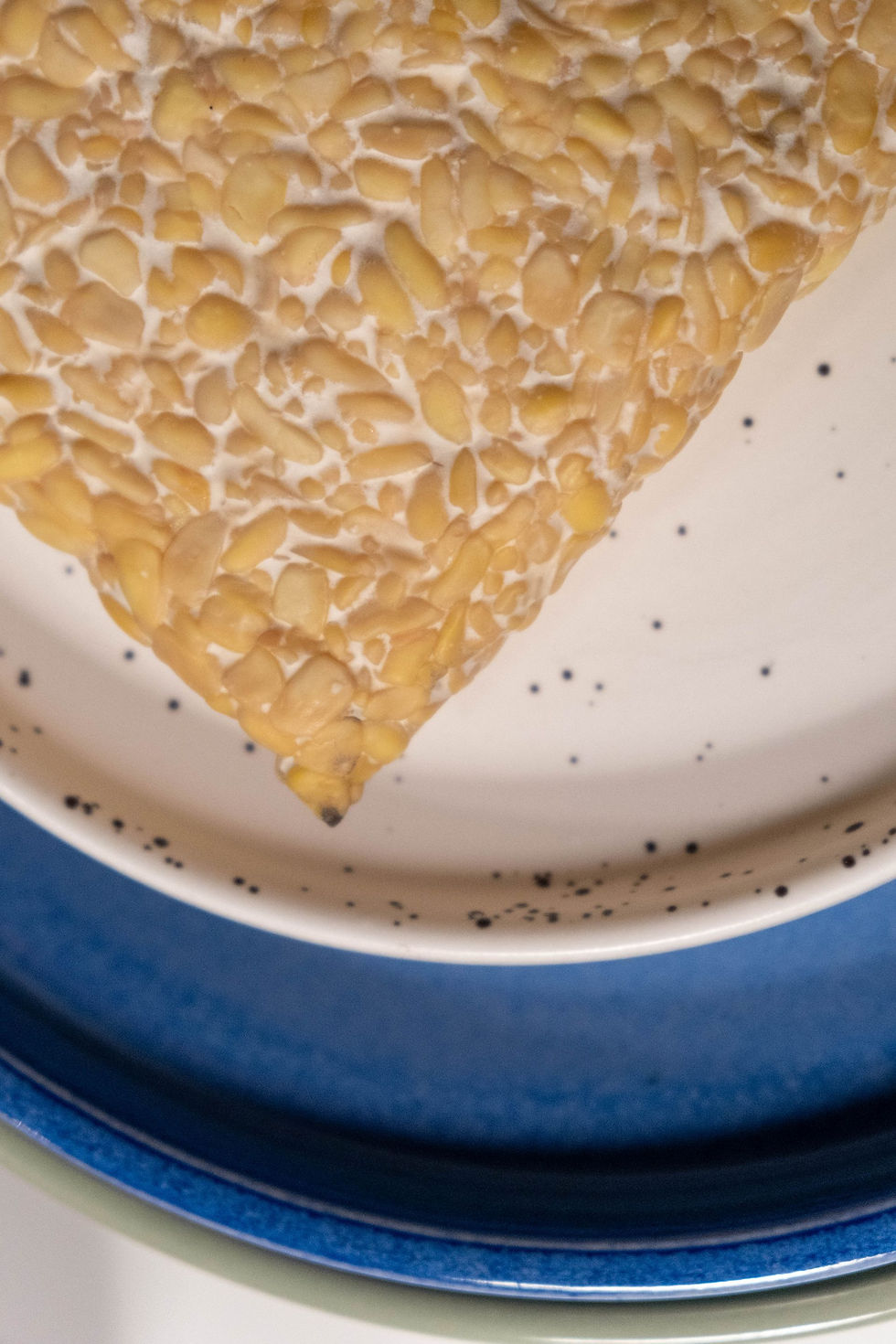
Tempeh is a traditional food from Java, Indonesia. It is made from cooked whole beans that are fermented with a mould until they bind into a firm cake. It has a firm, sliceable texture and a nutty, earthy, slightly mushroomy flavour. For the full story, read tempeh: everything you need to know.
How is tempeh made?
The beans are soaked, dehulled and cooked, then mixed with a tempeh starter culture (a mould called Rhizopus). They are packed into moulds or bags and kept warm, at around 30°C, for about 24 to 48 hours. During that time, the mould grows a fine white web around the beans and binds them together.
Is tempeh always made with soy?
No. Soy is the traditional choice, but practically any legume works. At Ragi, we make tempeh from chickpeas, soybeans, green peas, yellow peas and lentils.
Is tempeh vegan?
Yes. Tempeh is made entirely from plants: legumes, a starter culture and, in our case, a little apple cider vinegar.
Is tempeh gluten-free?
Tempeh made only from legumes, like ours, contains no gluten ingredients. Some tempehs elsewhere are made with grains such as barley or wheat, so always check the label if you avoid gluten.
Is tempeh a processed food?
Tempeh is a minimally processed food. The beans are simply cooked and fermented, with no additives. In fact, fermentation is one of the oldest ways of preparing food there is.
Nutrition
What nutrients does tempeh contain?
Tempeh is a good source of plant protein (around 18 to 20 g per 100 g for soy tempeh) and fibre, because the whole bean is used. It also naturally contains minerals such as iron and magnesium. The exact values depend on the legume, so check the product page for each tempeh.
How much tempeh can I eat?
There's no magic number. Tempeh is a legume-based food, so enjoy it as part of a varied diet, just like you would beans, lentils or chickpeas. A typical portion is around 100 g per person.
Cooking with tempeh
How do you cook tempeh?
Tempeh can be pan-fried, baked, grilled, steamed, crumbled into sauces or simmered in curries. It loves marinades and spices. Our tempeh cooking guide walks you through the best methods, and recipes like our kimchi fried rice with smoky tempeh are a great place to start.
Do I need to boil or steam tempeh before cooking it?
Only if it's pasteurised. Pasteurised tempeh can taste a little bitter and feel quite hard, and steaming or simmering it for about 10 minutes helps. Ragi's tempeh is fresh and unpasteurised, so it doesn't have that bitterness and you can cook it straight away.
Can I eat tempeh raw?
Tempeh needs to be cooked before eating. It's a bit like mushrooms: cooking brings out all its flavour and gives it a lovely golden crust.
Storage and freshness
How long does tempeh last?
Fresh tempeh keeps for about 10 days in the fridge. Its flavour gets stronger over time, which is perfectly normal.
Can I freeze tempeh?
Yes. Fresh tempeh freezes very well for up to a year. Thaw it in the fridge and use it within a couple of days. Once thawed, do not refreeze it.
What are the black spots on my tempeh?
Nothing to worry about. Black or grey spots are spores, a bit like the dark gills under a mushroom cap. They are a natural part of the mould's life cycle and simply show that the tempeh has matured and developed a stronger flavour.
What's the difference between pasteurised and unpasteurised tempeh?
Pasteurised tempeh has been heated after fermentation to extend its shelf life. This stops the culture and tends to make the tempeh firmer and sometimes slightly bitter. Unpasteurised tempeh is sold fresh: it has a softer texture and a milder, nuttier flavour, but it must be kept in the fridge and eaten within about 10 days (or frozen). We don't pasteurise our tempeh, to keep its best flavour and texture.
About Ragi's tempeh
Is Ragi's tempeh made with GMO beans?
No. We only use organic, GMO-free legumes, sourced in Switzerland whenever possible.
How many types of tempeh do you make?
We make tempeh from chickpeas, soybeans, green peas, yellow peas and lentils (including beluga lentils). Which ones are available changes with our production schedule, so have a look at the shop to see what's fresh this week.
Where can I buy Ragi's tempeh?
You can order it fresh from our online shop, with delivery across Switzerland. You'll also find it at selected partner shops and restaurants in Romandy. Try our chickpea tempeh or beluga lentil tempeh.
How do I dispose of the tempeh bag?
Our tempeh bag is not plastic. It is made from plant-based materials and is compostable, so you can put it in with your food waste.
Still have a question?
Write to us, we love talking tempeh. And if you haven't tried fresh, unpasteurised tempeh yet, now's the time: order yours here and discover how mild and nutty it can be.


Comments